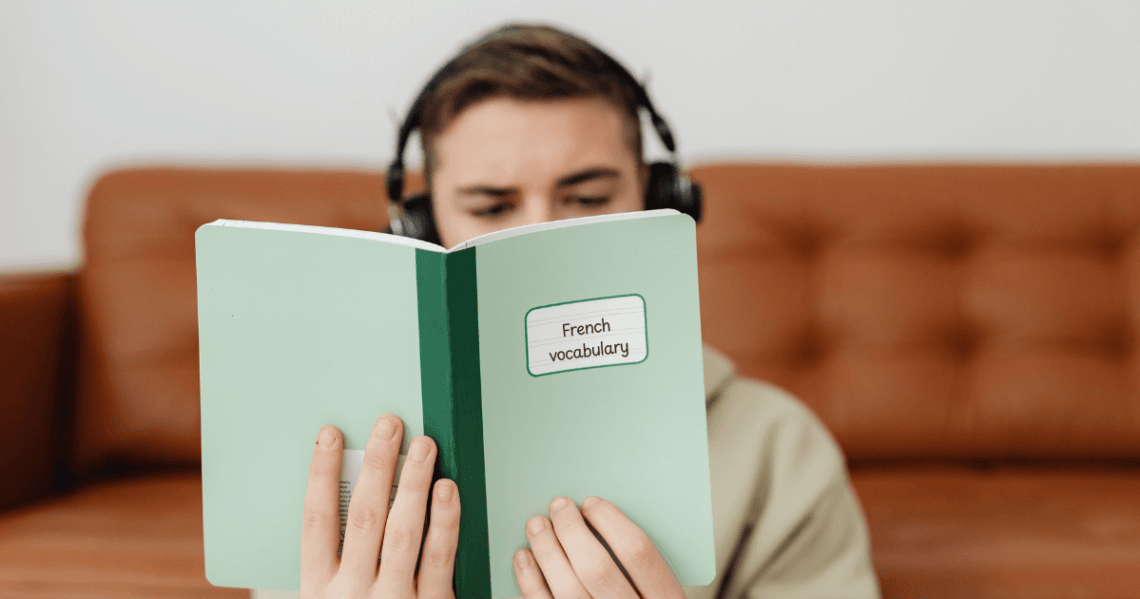
Is French Very Hard to Learn?
When people think of learning French, they often imagine sipping coffee in Paris, quoting poetry, or confidently saying oui with a perfect accent. Then reality sets in: conjugation charts, silent letters, nasal vowels.
So… is French really that hard to learn?
The short answer is: not really — especially when compared to many other world languages. But like any skill worth developing, learning French takes time, consistency, and exposure. What truly makes the difference is not your intelligence or your memory, but how you approach the learning process.
Let’s look at why French often seems difficult, why it may be easier than you think, and what really helps learners make steady, meaningful progress.
Why French Might Seem Hard (but doesn’t have to be)
Pronunciation can be tricky — at first
French has nasal vowels, silent letters, and something called liaisons, where a final consonant is pronounced only if the following word begins with a vowel. This can feel confusing, especially if you’re used to languages where spelling and pronunciation match more closely, like Spanish or Italian.
That said, the “mysterious” French accent is not impossible. You don’t need to sound like a Parisian to be understood. With regular listening, a bit of guidance, and time to imitate native speakers, your ear — and your mouth — gradually adjust. Many learners give up too early because they expect perfect pronunciation from the start. Patience and exposure matter far more than perfection.
Spelling and grammar: complex, but not a starting point
Yes, French grammar has its challenges: verb conjugations, gendered nouns, adjective agreements. It can feel like a maze. But here is something essential to understand:
Grammar should not be your starting point.
Too many learners begin their French journey the “school way” — memorising rules and tenses before they can understand spoken French or express even simple ideas. This often leads to frustration and slow progress.
A more natural learning order is the one your brain already knows from childhood:
- listen to understand
- speak when you feel ready
- read once sounds make sense
- write to express your feelings
- study grammar to clarify and refine
Grammar becomes far easier to understand after you have encountered the language in real use. Learning French is not about being perfect; it’s about communicating first.
Why French Might Be Easier Than You Think
It's Closely Related to English
This is often overlooked. French and English share a long history. After the Norman Conquest of England in 1066, French strongly influenced English vocabulary. As a result, around 40–45% of English words come from French or Latin roots.
That means English speakers already recognise hundreds of French words: restaurant, conversation, animal, minute, courage, important. Many others are very close in spelling and meaning. This gives English-speaking learners a significant advantage compared to those learning languages such as Chinese or Arabic.
It’s a Global Language with Immense Resources
French is spoken by over 300 million people across five continents. It is not limited to France: it is widely used in Canada, Switzerland, Belgium, parts of Africa, the Caribbean, and beyond.
This means:
abundant audio and written material
easy access to podcasts, videos, books, and music
many opportunities for immersion and exchange
Where there is exposure, progress follows.
French is a pleasure to learn
French is not only logical; it is also expressive and rich. Language is never just about rules. It is about stories, humour, culture, films, songs, and ways of thinking. As you learn French, you gain access to French cinema, literature, everyday conversations, and cultural references. That sense of discovery is deeply motivating.
What Really Makes the Difference: How You Learn
French is not a “hard” language, but learning it naturally requires:
regular exposure (especially listening)
patience and trust in the process
time — not shortcuts, but steady progress
the courage to speak, even with mistakes
Start with your ears. Surround yourself with French audio, even if you don’t understand much at first. Over time, your brain begins to recognise sounds, rhythms, and patterns. Understanding grows, then speaking follows. Grammar has its place — but it works best when it comes after experience.
Learning a language is not a race; it is a journey. French rewards curiosity, consistency, and perseverance.
Conclusion
So, is French hard to learn?
Not really.
It is logical, expressive, and surprisingly familiar for English speakers. More importantly, French is not something you “study” like mathematics. It is something you hear, absorb, and use.
Let go of fear and perfectionism. Begin where all meaningful language learning starts: by listening, enjoying, and letting the language settle in.
French is not just a language. It is an entry point into another way of seeing the world.


You May Also Like